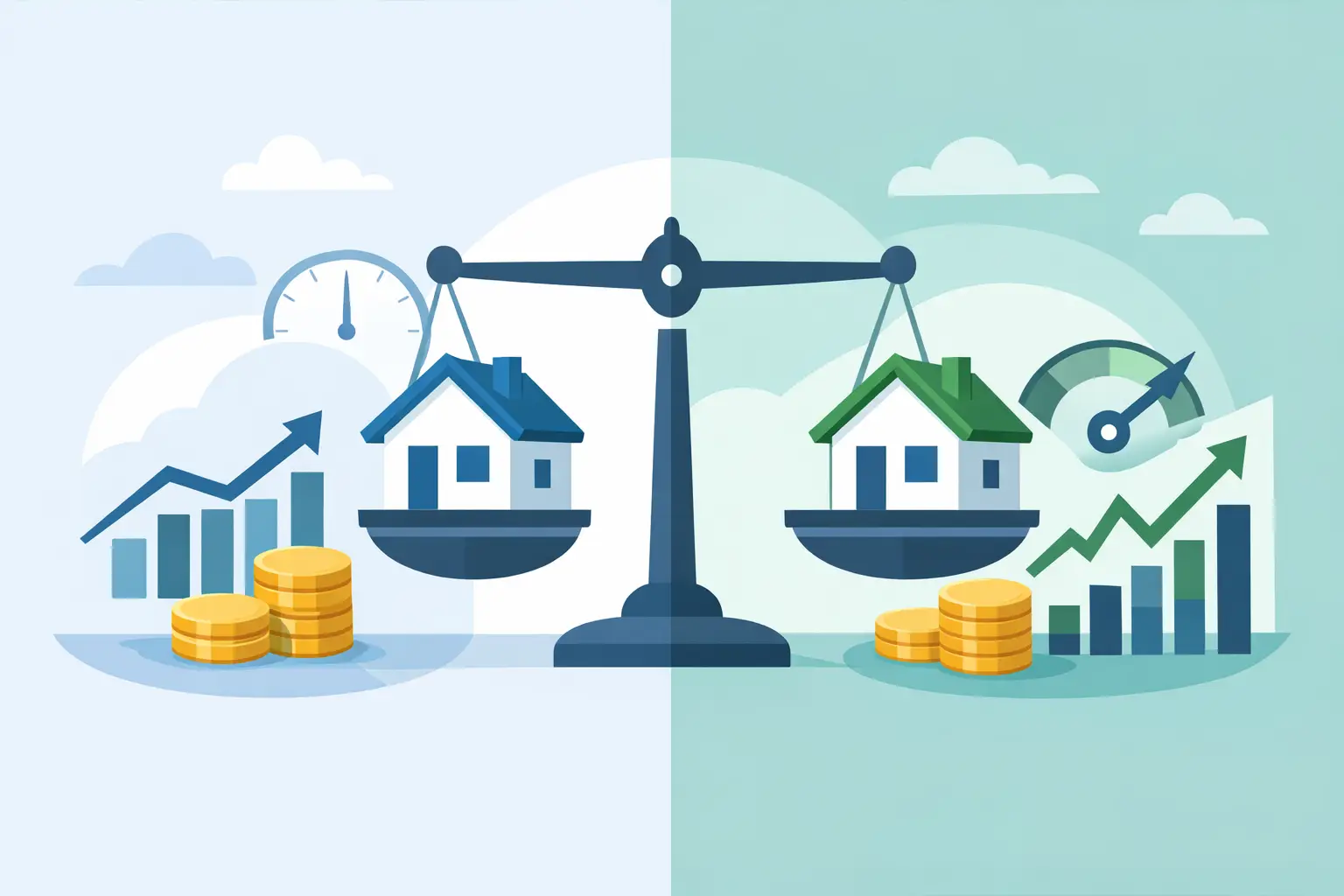
A low starting rate can look like the obvious winner – right up until the first adjustment hits and your payment changes. That is why the fixed vs adjustable mortgage decision matters so much. The right loan is not just about getting approved. It is about choosing a payment structure that still makes sense months and years after closing.
For some borrowers, predictability is everything. For others, flexibility and a lower initial rate create real financial advantages. The better choice depends on your timeline, income, risk tolerance, and what you want this property to do for you.
Fixed vs Adjustable Mortgage: The Core Difference
A fixed-rate mortgage keeps the same interest rate for the life of the loan. Your principal and interest payment stays steady, which makes budgeting easier and removes uncertainty from the equation. If you plan to stay in the home for a long time, that stability can be a major advantage.
An adjustable-rate mortgage, or ARM, starts with a fixed rate for an initial period and then adjusts based on market conditions and the terms of the loan. A 5/6 ARM, for example, keeps the initial rate for five years and can then adjust every six months. A 7/6 or 10/6 ARM works the same way, just with a longer initial fixed period.
The appeal of an ARM is simple: the starting rate is often lower than a comparable fixed-rate loan. That can mean a lower monthly payment, more buying power, or a better short-term fit for a borrower who does not expect to keep the loan for decades.
When a Fixed-Rate Mortgage Makes More Sense
A fixed-rate mortgage tends to fit borrowers who want certainty. If you are buying a primary residence and expect to stay put, the consistency of a fixed payment can help you plan with confidence. This matters even more if your budget is already tight or you simply do not want future rate changes affecting your housing costs.
Fixed loans also make sense when interest rates are relatively favorable and you want to lock them in. If rates rise later, your mortgage does not change. That protection can bring real peace of mind, especially in a market where affordability is already under pressure.
For first-time buyers, a fixed loan is often easier to understand and easier to live with. There are fewer moving parts. You know what your principal and interest payment will be, and that can make the entire homeownership experience feel more manageable.
There is a trade-off, though. Fixed-rate mortgages commonly start with a higher rate than ARMs. That means you may pay more each month upfront, and in some cases that higher payment can limit how much home you can comfortably afford.
When an Adjustable-Rate Mortgage Can Be the Smarter Move
An ARM is not automatically the risky option people assume it is. In the right situation, it can be a highly practical financing strategy.
If you expect to move, refinance, or sell before the fixed period ends, an adjustable mortgage may allow you to benefit from a lower initial rate without ever reaching the adjustment phase. That is one reason ARMs often appeal to move-up buyers, investors, and borrowers using a home as a shorter-term stepping stone rather than a forever property.
An ARM can also help borrowers maximize cash flow in the early years of ownership. A lower payment can create room in the budget for renovations, debt payoff, savings, or other financial goals. For a borrower with strong income growth ahead, taking the lower initial rate may be a calculated and reasonable choice.
The key is not to focus only on the intro rate. You need to understand exactly when the loan adjusts, how often it adjusts, how high it can go, and whether your budget can handle that change if rates move higher.
The Real Risk in a Fixed vs Adjustable Mortgage Decision
The biggest risk with a fixed-rate mortgage is not volatility. It is opportunity cost. If you lock into a higher rate and end up moving or refinancing sooner than expected, you may have paid more than necessary for stability you did not use for very long.
The biggest risk with an ARM is payment uncertainty. Even with rate caps in place, adjustments can increase your monthly obligation. If your budget only works at the introductory rate, that loan may not be the right fit.
This is where honest planning matters. Not best-case planning. Real planning.
If your income varies, if you are stretching to qualify, or if you know rising payments would create stress, fixed may be the safer path. If your timeline is short, your finances are strong, and you are comfortable with some future variability, an ARM may be worth serious consideration.
Questions to Ask Before You Choose
Borrowers often start with one question: Which loan has the lower rate? That is understandable, but it is not enough.
A better place to start is with your own timeline. How long do you realistically expect to keep this home and this loan? If you are buying in Rancho Cucamonga or elsewhere in Southern California and think there is a strong chance you will relocate, refinance, or upgrade within a few years, that changes the math.
You should also ask how much payment stability matters to your household. Some borrowers sleep better knowing the number will not change. Others are comfortable taking some rate risk in exchange for a lower payment now.
Finally, look closely at the details of the ARM itself. Not all adjustable loans are the same. The initial fixed period, adjustment frequency, index, margin, and caps all affect how the loan behaves over time. A transparent process matters here because the differences are easy to gloss over and expensive to misunderstand.
Fixed vs Adjustable Mortgage for Refinancing
The fixed vs adjustable mortgage conversation is not just for homebuyers. It matters in refinancing too.
For homeowners refinancing into a long-term loan, a fixed rate can provide lasting payment stability and protect against future increases. That can be especially helpful if the goal is to simplify finances or hold the property for many years.
For others, an ARM refinance may create a near-term payment reduction that supports a specific goal, like improving monthly cash flow or bridging a shorter ownership period. If you know you are unlikely to keep the loan long enough to reach the adjustable phase, the ARM option can be strategically sound.
The same rule applies: the refinance should match your actual plan, not an optimistic guess.
How Investors Often Think About It
Real estate investors usually evaluate mortgage options through a different lens. Cash flow, holding period, and return strategy often matter more than emotional comfort with a payment structure.
A fixed-rate loan can offer dependable long-term numbers for a rental held over many years. That stability can make future planning easier. An ARM, on the other hand, may improve short-term cash flow or support a property strategy built around renovation, repositioning, or resale within the fixed-rate window.
Neither is automatically better. The loan needs to support the investment model.
Why the Right Guidance Matters
Mortgage decisions can look simple when reduced to rate shopping, but structure matters just as much as pricing. The wrong loan can create stress even if the rate looked competitive at closing. The right loan supports your budget, your timeline, and your next financial move.
That is why borrowers benefit from working with a mortgage partner who explains trade-offs clearly and moves quickly enough to keep the process on track. In Vision Mortgage focuses on exactly that kind of guidance – helping borrowers compare options with confidence, understand what they are signing, and move from pre-approval to closing with clarity.
A fixed-rate mortgage is not always the safe choice, and an adjustable-rate mortgage is not always the aggressive one. The better option is the one that fits your life as it actually is. If you choose based on that, not just the headline rate, you give yourself a much better chance of feeling good about the loan long after closing day.