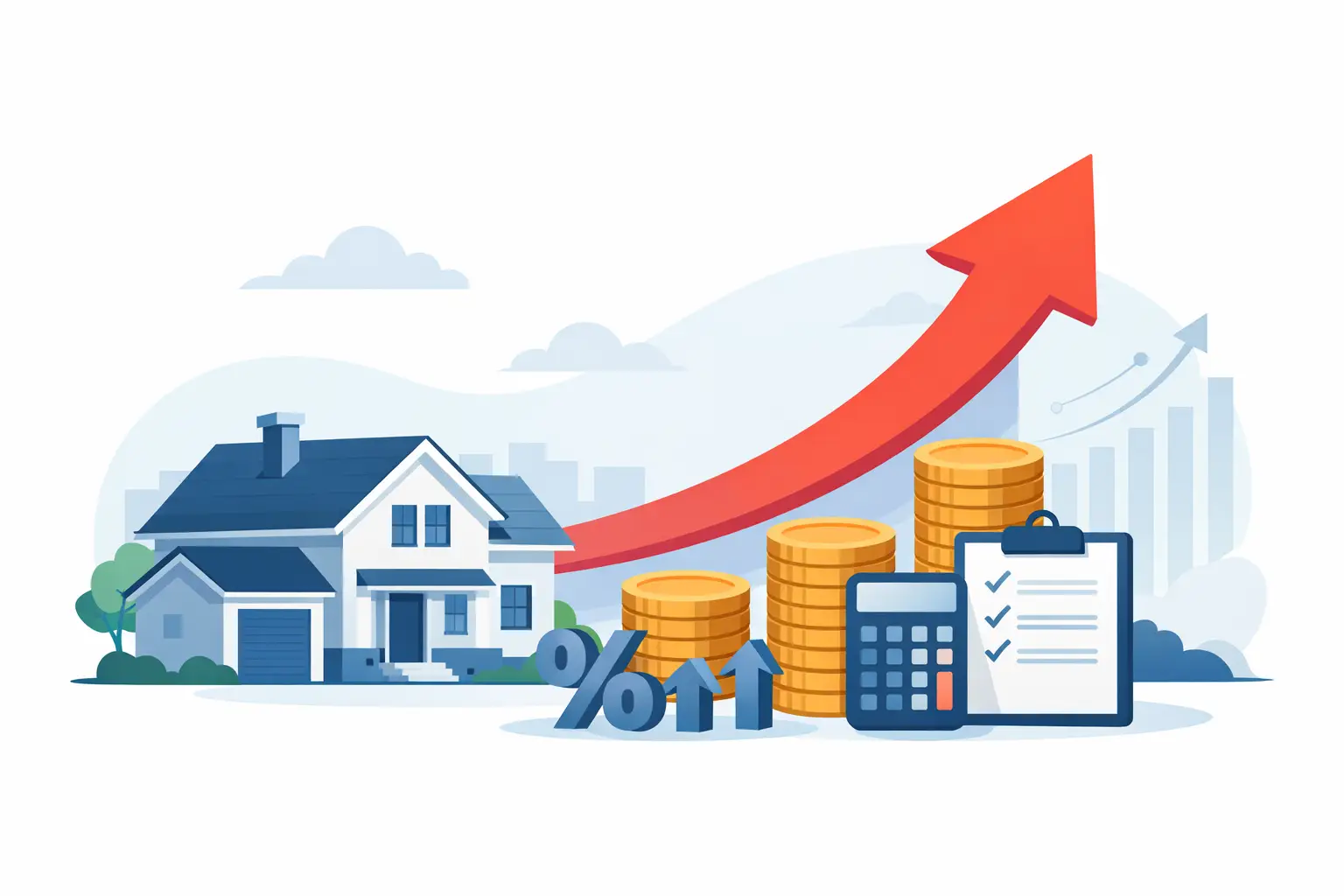
One week a buyer is told rates look manageable. The next week, the payment estimate is noticeably higher, and the same home suddenly feels less comfortable. If you have been asking why are interest rates on mortgages going up, you are not alone. It is one of the biggest questions facing homebuyers, refinancers, and investors right now, especially in a market where affordability already feels tight.
The short answer is that mortgage rates move based on a mix of inflation, Federal Reserve policy, bond market activity, economic data, and lender risk. But the more useful answer is understanding how those forces work together and what they mean for your next financing decision.
Why are interest rates on mortgages going up right now?
Mortgage rates do not rise for one single reason. They rise when the broader financial market believes money should cost more to borrow, or when lenders need more cushion against uncertainty. That can happen even when headlines make it sound like only the Federal Reserve is in control.
A common misunderstanding is that the Fed directly sets mortgage rates. It does not. The Fed controls the federal funds rate, which is a short-term benchmark used by banks. Mortgage rates, especially for 30-year fixed loans, are influenced more by the bond market, particularly yields on mortgage-backed securities and US Treasury bonds. Still, when the Fed raises rates to cool inflation, mortgage markets usually respond.
That is why borrowers can see mortgage rates climb even before an official Fed announcement. Markets are forward-looking. If investors expect inflation to stay stubborn or believe the Fed will keep rates higher for longer, mortgage pricing can rise in advance.
Inflation is one of the biggest drivers
When inflation stays elevated, lenders and investors want higher returns. If money will be worth less in the future, they need a better yield today to make lending worthwhile. That higher required return shows up in mortgage rates.
This matters because a mortgage is a long-term loan. If an investor is buying a mortgage-backed security that may pay over 15 to 30 years, inflation risk matters a lot. The higher the inflation outlook, the higher the rate usually needs to be.
Even when inflation is slowing, rates may not fall quickly. Markets care about the direction of inflation, but they also care about how long it may take to get back under control. A slight improvement in one report is rarely enough on its own.
The Fed influences the market, even if it does not set mortgage rates
When the Federal Reserve signals a tougher stance on inflation, the entire cost of borrowing tends to move up. Banks, investors, and lenders all adjust pricing based on what they expect from future policy.
This is one reason buyers sometimes feel confused. They hear that the Fed did not raise rates at a meeting, but mortgage rates still went up. That can happen because mortgage markets are reacting not to the current move, but to the Fed’s outlook, language, and the broader economy.
If the message is that rates may stay elevated longer than expected, mortgage pricing can remain high or even climb. The market is less concerned with one single announcement than with the path ahead.
Bond yields have a direct impact on mortgage pricing
If you want to understand why are interest rates on mortgages going up, watch bond yields. Mortgage rates tend to track the 10-year Treasury yield, though not perfectly. When Treasury yields rise, mortgage rates often rise too.
Why does that happen? Investors compare mortgage-backed securities to other fixed-income investments like Treasuries. If safer government bonds are paying more, mortgage-backed securities usually need to offer higher returns to stay attractive. That means lenders raise rates.
The spread between Treasury yields and mortgage rates also matters. In uncertain markets, that spread can widen. So even if the 10-year Treasury does not move dramatically, mortgage rates can still rise if investors see more risk in housing or lending conditions.
Risk and uncertainty push lenders to price more cautiously
Mortgage rates are not based only on economic theory. They are also based on risk management. When lenders see more uncertainty, they often price loans more conservatively.
That uncertainty can come from several places. It may be concern about recession, job market weakness, home price volatility, lower consumer confidence, or shifts in investor demand for mortgage-backed securities. It may also reflect operational factors like liquidity, servicing costs, or compliance burden.
In practical terms, uncertainty raises the cost of doing business. Lenders account for that in the rate they offer. This is one reason rates do not always fall as fast as borrowers hope when economic news improves.
Housing market strength can keep rates elevated too
It may seem backward, but a strong economy can keep mortgage rates higher. If employment remains solid, wages continue rising, and consumer spending stays active, inflation can remain sticky. That creates pressure for rates to stay up.
A resilient housing market can have a similar effect. If home demand remains steady despite higher borrowing costs, there is less pressure for rates to come down quickly. Markets may read that as a sign the economy can absorb elevated borrowing costs for longer.
In Southern California especially, limited housing inventory can keep competition active even when rates are not ideal. Buyers may still be willing to move forward, which keeps demand from cooling as much as expected.
Why mortgage rates can rise even when the news sounds mixed
Borrowers often expect a simple pattern: bad economy means lower rates, good economy means higher rates. Real life is more complicated.
If the economy slows sharply, rates can fall because investors move into bonds and expect easier Fed policy. But if inflation is still above target, rates may not drop much even during weaker growth. On the other hand, if growth is strong but inflation looks controlled, rates may stabilize rather than jump.
That is why mortgage timing can feel frustrating. Several forces are working at once, and they do not always point in the same direction.
What rising rates mean for buyers and homeowners
The biggest effect is straightforward: your buying power drops. A higher rate means a higher monthly principal and interest payment, which can reduce the price range that feels comfortable.
For refinancers, higher rates may remove the usual incentive to replace an existing low-rate mortgage. But that does not mean refinancing is off the table. Some homeowners still refinance to consolidate debt, change loan terms, remove mortgage insurance, or access equity. The right move depends on the full financial picture, not just the headline rate.
For investors, rising rates can change cash flow projections and debt service coverage. Deals that worked at one rate may not pencil out at another. That makes fast, accurate financing analysis even more important.
How to respond when mortgage rates are rising
The first step is not panic. It is preparation. Markets move daily, but your strategy should be based on your timeline, budget, and goals.
Start by getting clear on payment, not just purchase price. A home that looks fine on paper can feel very different once taxes, insurance, and rate changes are factored in. Strong pre-approval matters here because it gives you a realistic range instead of a guess.
Next, look at loan structure. A fixed-rate mortgage offers payment stability. An adjustable-rate mortgage may provide a lower initial rate if it fits your timeline and risk tolerance. VA loans can also offer meaningful advantages for eligible borrowers. There is no one-size-fits-all answer. The right loan is the one that supports your broader financial plan.
It also helps to watch the full cost of the loan, not just the note rate. Points, lender fees, and credits all affect the outcome. In some cases, paying slightly more upfront may create worthwhile monthly savings. In others, keeping cash on hand may be the smarter move.
And if you are under contract or close to locking, timing matters. Mortgage rates can change quickly. A responsive lending team can help you evaluate when to lock, when to float, and how to weigh risk versus opportunity with a clear, transparent process.
Will mortgage rates come back down?
They probably will at some point, but the real question is when and by how much. Rates do not usually retreat in a straight line. They move with inflation trends, labor data, Fed expectations, and investor sentiment.
That means waiting for the perfect rate can be costly if home prices, competition, or rent continue rising in the meantime. For some borrowers, acting now with the right loan structure makes more sense than waiting for a future market that may or may not arrive on schedule.
A smart mortgage decision is rarely about predicting every rate move correctly. It is about making a well-informed choice with the information available today. If you understand what is pushing rates higher and how that affects your options, you are in a much stronger position to move with confidence. And when the process is clear, fast, and tailored to your goals, higher rates become something to plan around, not a reason to stand still.